
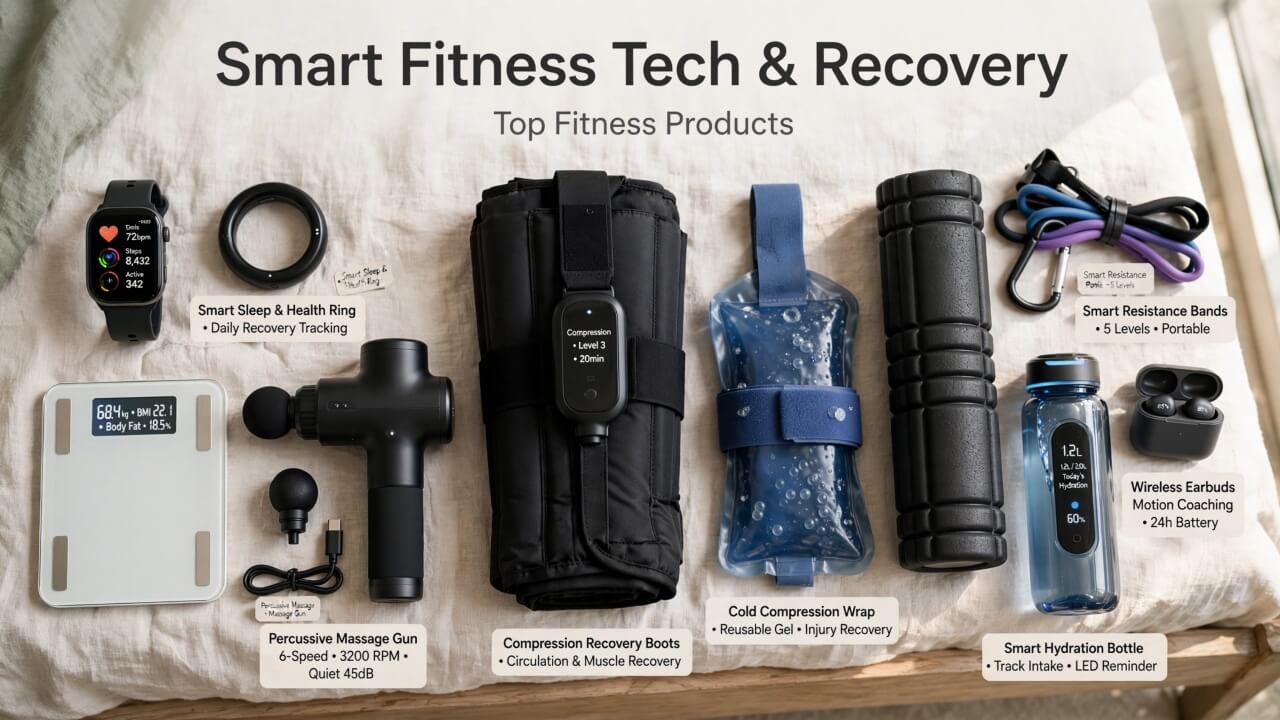
From wearable devices that monitor daily biometrics to advanced tools designed to support post-workout recovery, smart fitness technology. Now it is becoming an increasingly important part of modern wellness routines. Technology has transformed the way people approach exercise, performance, and recovery.
For athletes, gym-goers, runners, and everyday fitness enthusiasts, the right technology can provide useful insights into training habits while making recovery more convenient. Three products that have attracted significant attention are biometric smart rings, percussion massage guns, and compressed air recovery boots.
While each product serves a different purpose, they share a common goal: helping people better understand and support their bodies before, during, and after exercise.
1. Biometric Smart Rings for Smart Fitness Tracking
Biometric smart rings are small wearable devices that can collect health and activity data throughout the day. Their compact design makes them an appealing alternative to larger fitness trackers and smartwatches, particularly for people who prefer a discreet wearable.
Depending on the device, smart rings may monitor metrics such as heart rate, sleep patterns, body temperature trends, blood oxygen levels, activity, and other recovery-related measurements.
One of the biggest advantages of a smart ring is its ability to provide a broader view of daily health and fitness. Rather than concentrating exclusively on workout performance, users can examine how sleep, activity, and recovery fit together.
Why Smart Rings Are Useful for Fitness
For someone following a regular exercise program, biometric data can help reveal patterns over time. For example, consistently poor sleep may coincide with reduced energy or difficulty maintaining a demanding training schedule.
Smart rings can therefore encourage users to think beyond individual workouts and consider recovery and overall wellness as part of fitness performance.
It is important to remember, however, that wearable devices provide estimates and trends rather than medical diagnoses. Their data is most useful when viewed as one source of information alongside personal experience and, when appropriate, professional medical advice.
2. Percussion Massage Guns for Muscle Recovery
Percussion massage guns have become popular recovery tools for people who want a convenient way to incorporate massage into their fitness routines. These handheld devices use rapid, repetitive movements to apply pressure to muscles and surrounding soft tissue.
Many models offer multiple speed levels and interchangeable attachments, allowing users to customize sessions for different body areas.
How to Use a Percussion Massage Gun
Fitness enthusiasts commonly incorporate massage guns into both pre- and post-workout routines. A brief session may be incorporated into the overall warm-up routine before beginning exercise. After training, users may use the device as part of their cooldown and recovery routine.
READ:
Common areas of use include the thighs, calves, glutes, shoulders, and arms.
However, more is not necessarily better. Users should follow the manufacturer’s instructions and avoid applying a percussion massage gun directly to injuries, bones, open wounds, or other sensitive areas. Anyone with a significant injury or medical concern should seek appropriate professional guidance.
3. Compressed Air Recovery Boots
These boots for compressed air recovery are wearable devices engineered to deliver sequential compression to the legs. They typically consist of inflatable sections that fill and release air according to a selected program.
These recovery products have become particularly popular among runners, cyclists, strength athletes, and other people whose workouts place significant demands on their legs.
Benefits of Recovery Boots for Active People
The convenience factor is one of the primary draws of utilizing a compressed air recovery boot. A user can sit or lie down while the device operates, making it easy to incorporate a recovery session into a post-workout routine.
Recovery boots can also complement other important recovery habits, including adequate sleep, hydration, nutrition, stretching, and appropriate rest between demanding workouts.
They should not be viewed as a replacement for these fundamentals or as a treatment for an injury. Instead, they are best considered one component of a comprehensive recovery strategy.
How Smart Fitness Technology Supports a Complete Routine
The greatest value of modern fitness technology may come from combining different tools rather than relying on a single product.
A biometric smart ring can help users monitor activity, sleep, and recovery trends. A percussion massage gun can provide a convenient muscle-focused recovery option. Compressed air recovery boots can be incorporated into post-workout relaxation.
Together, these technologies demonstrate how fitness is becoming increasingly personalized and data-driven.
Individuals may transition from solely inquiring about their training intensity to asking more comprehensive questions, such as: “Did I achieve a restful night’s sleep?” Am I recovering adequately? How does my body respond to my training schedule? Am I giving myself enough time between demanding sessions?
This approach can help encourage smarter and more sustainable fitness habits.
Choosing the Right Fitness Recovery Product
The best fitness technology depends on an individual’s goals, training style, preferences, and budget.
If tracking and understanding daily health trends is the priority, a biometric smart ring may be worth considering. Those looking for a portable tool for muscle-focused recovery may prefer a percussion massage gun. Those people frequently engage in intense lower-body training sessions. Compressed air recovery boots may be a beneficial inclusion in their recovery regimen.
Before purchasing any fitness technology, consider factors such as comfort, ease of use, battery life, available features, build quality, warranty coverage, and compatibility with existing devices or apps.
The Future of Fitness and Recovery Technology
Smart fitness technology is changing how people monitor training and approach recovery. As wearable sensors, mobile applications, and recovery devices continue to evolve, consumers have more opportunities to personalize their fitness routines.
Nevertheless, technology should support—not replace—the fundamentals of good health. Regular exercise, balanced nutrition, sufficient sleep, hydration, rest, and sensible training remain the foundation of long-term fitness.
Biometric smart rings, percussion massage guns, and compressed air recovery boots can add useful tools and insights to that foundation. Used thoughtfully, they can make fitness tracking and recovery more convenient while encouraging people to pay greater attention to the relationship between training, performance, and recovery.
Final Thoughts
The modern fitness landscape is increasingly connected, personalized, and technology-driven. Whether monitoring daily biometrics with a smart ring, incorporating a percussion massage gun into a recovery routine. Or enjoying a session of pneumatic compression therapy with recovery boots post an intense exercise session. Consumers now have a growing range of options for supporting their fitness goals.
The key is to choose technology that fits your lifestyle and use it alongside—not instead of—the proven fundamentals of a healthy, sustainable fitness routine.
Leave a Reply