
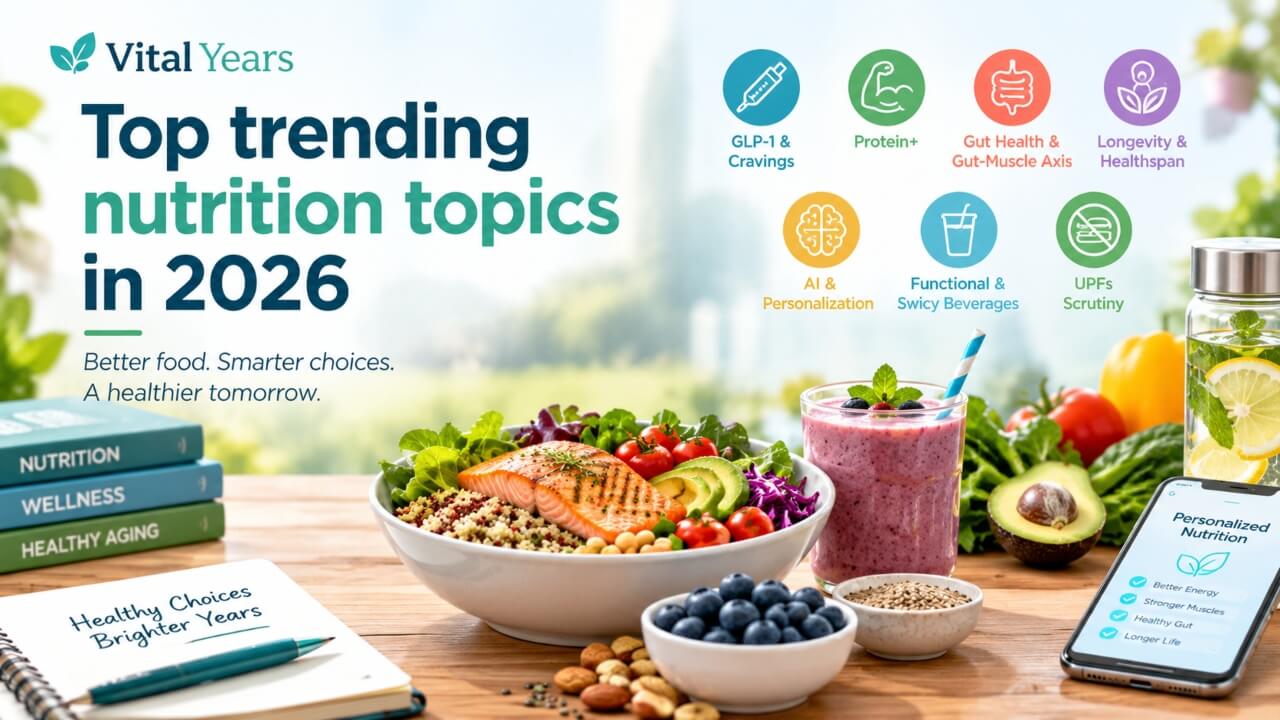
Nutrition in 2026 is moving beyond the traditional idea of simply counting calories or following the latest diet. Increasingly, the conversation is about healthspan, muscle preservation, metabolic health, gut health, personalization, and long-term vitality.
The latest nutrition landscape also reflects changing consumer habits. Interest in protein-rich foods, functional beverages, gut health, personalized nutrition, and foods that support people using GLP-1 medications is reshaping what people eat and what appears on grocery shelves. :chatgpt-content-reference{index=“1”}
Here are seven of the top nutrition topics shaping 2026.
For the Vital Years approach to healthy aging, the most useful nutrition trends are not necessarily the most fashionable ones. Instead, they are the trends that can help people build sustainable habits, maintain independence, preserve muscle, and support quality of life.
1. GLP-1 Medications and Cravings Management
FTC Disclosure: www.nennette.com may receive financial compensation when the affiliate link(s) on this page are clicked on, and a purchase is made.
GLP-1 medications have become one of the most influential forces in nutrition and weight management. Because these medications can reduce appetite and slow digestion, nutrition strategies are increasingly focused not simply on eating less, but on getting enough nutrition from smaller amounts of food. :chatgpt-content-reference{index=“2”}
For people taking GLP-1 medications under medical supervision, priorities can include adequate protein, fiber, fluids, vitamins, and minerals. Smaller, nutrient-dense meals may be easier to tolerate than large meals, particularly when nausea, bloating, or reduced appetite occurs. :chatgpt-content-reference{index=“3”}
Cravings management is also evolving. Rather than viewing cravings as a simple failure of willpower, nutrition professionals are increasingly considering appetite, satiety, food environment, sleep, stress, and eating patterns.
Vital Years takeaway: Weight management should not come at the expense of muscle, nutrition, or vitality. Anyone using a GLP-1 medication should discuss individualized nutrition and exercise strategies with an appropriate healthcare professional.
2. The “Protein+” Movement
Protein is arguably one of the biggest nutrition stories of 2026. But the conversation is expanding from simply eating “more protein” to combining protein with other nutritional benefits.
READ:
- Golden Years Glow: Embracing Healthy Aging with Grace and Vitality
- Longevity: The Secrets to a Long and Vibrant Life
Think Protein+: protein plus fiber, protein plus whole foods, protein plus healthy fats, or protein plus micronutrients.
This trend is particularly relevant to healthy aging. Maintaining muscle strength and function becomes increasingly important as we grow older, and protein is an important component of an overall strategy that also includes resistance exercise. Research and expert guidance increasingly emphasize the importance of adequate protein during aging and weight loss. :chatgpt-content-reference{index=“4”}
However, a “high-protein” label does not automatically make a food healthy. Some protein-enhanced products can still contain substantial amounts of added sugar, sodium, saturated fat, or highly processed ingredients. :chatgpt-content-reference{index=“5”}
Vital Years takeaway: Prioritize protein-rich whole foods such as fish, eggs, poultry, yogurt, beans, lentils, tofu, nuts, and seeds, while using protein-fortified products strategically rather than automatically.
3. Gut Health and the Gut-Muscle Axis
Gut health remains a major nutrition trend in 2026, but the conversation is becoming more sophisticated.
Instead of focusing only on probiotics, researchers and consumers are increasingly interested in the broader ecosystem of dietary fiber, fermented foods, the gut microbiome, digestive function, and the relationship between the gut and other systems of the body.
The emerging concept of the gut-muscle axis explores how the gut microbiome and its metabolites may interact with muscle metabolism, inflammation, physical function, and aging. While this is an exciting area of research, many specific claims remain under investigation.
A 2026 international consensus statement also emphasized that “gut health” should not be treated as a vague marketing term. Healthy gastrointestinal function involves both measurable aspects of function and the individual’s experience of digestive well-being. :chatgpt-content-reference{index=“6”}
Vital Years takeaway: Build gut-friendly eating habits around vegetables, fruits, legumes, whole grains, nuts, seeds, and other fiber-rich foods, while including fermented foods when they suit your individual diet.
4. Healthspan and Longevity Nutrition
One of the most important shifts in nutrition is the movement from lifespan to healthspan.
Lifespan refers to how long we live. Healthspan refers to how long we remain healthy, functional, independent, and able to participate in the activities that matter to us.
This perspective changes the question from:
“What diet will help me lose weight?”
to:
“What way of eating will help me stay strong, energetic, independent, and healthy as I age?”
Nutrition for longevity increasingly emphasizes adequate protein, vegetables and fruit, fiber, healthy fats, minimally processed foods, hydration, and overall dietary quality.
For older adults in particular, maintaining muscle and physical function is a central part of healthy aging. :chatgpt-content-reference{index=“7”}
Vital Years takeaway: The best longevity diet is not necessarily the most restrictive. It is the eating pattern you can maintain while providing your body with the nutrients required for strength, brain health, metabolic health, and everyday function.
5. AI and Personalized Nutrition
Artificial intelligence is becoming another major force in nutrition.
Instead of giving everyone identical dietary recommendations, personalized nutrition aims to account for differences in factors such as metabolic responses, lifestyle, health goals, and potentially microbiome or other biological data.
Recent research describes personalized nutrition as an emerging approach for healthy aging, with genomic, metabolic, and microbiome information potentially helping tailor dietary strategies to individuals. AI and real-time monitoring are among the technologies being explored to make this approach more practical. :chatgpt-content-reference{index=“8”}
AI-powered applications may help people plan meals, analyze food intake, identify patterns, or generate recommendations. But technology should complement—not replace—professional nutritional and medical advice.
Vital Years takeaway: Personalization can make healthy eating more realistic, but good nutrition still depends on evidence, context, and individual needs rather than an algorithm alone.
6. Functional and “Swicy” Beverages
In 2026, beverages are becoming more than something to drink when thirsty. The functional beverage category increasingly focuses on specific purposes such as hydration, energy, gut health, relaxation, protein intake, and recovery. :chatgpt-content-reference{index=“9”}
At the same time, consumers are looking for more interesting flavors. One example is “swicy,” a combination of sweet and spicy flavors that is gaining attention in food and beverage culture. :chatgpt-content-reference{index=“10”}
The opportunity is exciting, but the same principle applies: a beverage marketed as “functional” is not automatically healthy. Added sugar, caffeine, sodium, calories, and ingredient quality still matter.
Vital Years takeaway: Choose beverages based on what your body actually needs. Water should remain a foundation, while functional beverages can be useful additions when their ingredients and claims make sense for you.
7. Ultra-Processed Foods (UPFs) Under Greater Scrutiny
Ultra-processed foods continue to attract significant attention from researchers, policymakers, health professionals, and consumers.
The discussion is becoming more nuanced than simply labeling every packaged food as unhealthy. Researchers are examining how processing, ingredients, dietary patterns, energy density, palatability, and overall food quality interact with health outcomes.
In 2026, the U.S. FDA’s Human Foods Program listed ultra-processed foods as an area of ongoing work, including efforts to better understand their potential risks and develop a federal definition. :chatgpt-content-reference{index=“11”}
Research is also exploring better ways to measure UPF exposure, including the use of biological markers rather than relying entirely on self-reported dietary information. :chatgpt-content-reference{index=“12”}
Vital Years takeaway: Rather than obsessing over whether a single food is “processed,” focus on the overall pattern of your diet. Make minimally processed and nutrient-dense foods the foundation, while reducing reliance on highly processed products that are high in added sugars, sodium, or calories and low in nutritional value.
The Bigger Picture: From Nutrition Trends to Sustainable Habits
The biggest nutrition trend of 2026 may actually be the movement toward whole-person nutrition.
Protein matters. Gut health matters. Metabolic health matters. Food quality matters. Personalization matters. But none of these exists in isolation.
A healthy diet should work alongside physical activity, sleep, stress management, social connection, preventive healthcare, and other lifestyle factors.
For Vital Years readers, the goal should not be to chase every new nutrition trend. Instead, use emerging ideas as opportunities to improve the fundamentals:
- Eat a variety of minimally processed foods.
- Prioritize adequate protein and fiber.
- Include plenty of vegetables and fruits.
- Support muscle health with nutrition and resistance exercise.
- Stay adequately hydrated.
- Pay attention to appetite and hunger cues.
- Limit excessive added sugar and highly processed foods.
- Choose sustainable habits rather than extreme diets.
- Personalize your approach according to your needs and circumstances.
Conclusion: Make 2026 the Year of Smarter Nutrition
The nutrition landscape of 2026 is increasingly centered on quality, personalization, muscle preservation, metabolic health, gut health, and healthy aging.
From GLP-1 medications and the Protein+ movement to AI-powered nutrition and functional beverages, these trends reflect a broader shift toward understanding food as part of a much bigger picture of health.
But trends come and go. The fundamentals remain remarkably consistent.
A nutritious, varied diet; regular physical activity; adequate protein and fiber; good hydration; and sustainable eating habits can provide a strong foundation for living not only longer, but better.
At Vital Years, the ultimate goal isn’t simply adding years to life—it’s adding vitality to those years.
Health note: Nutrition needs vary by age, health status, medications, activity level, and other individual factors. People taking prescription medications such as GLP-1 therapies should consult their healthcare professional or a registered dietitian for individualized guidance.
Disclaimer: nennette.com does not provide medical advice. The information in our videos—including text, graphics, images, and other content—is meant for educational purposes only. Always consult your doctor or a qualified health professional before making any health or lifestyle changes.
Leave a Reply