The concept of “Vital Years” carries significant weight in human life. Encapsulating the pinnacle of productivity and personal development. These crucial years, typically spanning from early adulthood to middle age, play a pivotal role in shaping individual identity and determining long-term outcomes. Longevity, a key element intertwined with the notion of “Vital Years,” underscores the significance of maintaining physical health.
Having a sharp intellect and robust emotional well-being is imperative for guiding a fulfilling and purposeful existence. By embracing healthy lifestyle habits, pursuing continuous learning opportunities, and fostering strong social connections, individuals can optimize their Vital Years and pave the way for a resilient and enriching future. Taking a proactive approach to self-care and personal development. Individuals can unlock their full potential during these transformative years and build a lasting legacy of impact and significance.
FTC Disclosure: www.nennette.com may receive financial compensation when the affiliate link(s) on this page are clicked on and a purchase is made.
What Is Longevity?
Longevity is about more than simply adding years to your life. True longevity means creating the conditions that help you remain healthy, independent, active, and engaged for as many of those years as possible.
This concept is closely connected to healthspan—the number of years a person lives in good health and maintains physical, mental, and social well-being. While genetics can influence how we age, everyday lifestyle choices can play an important role in supporting healthy aging.
At Vital Years, we believe longevity is not about chasing perfection. It is about building sustainable habits that support your body, mind, and relationships throughout every stage of life.
Healthspan: Make Healthy Years Count
Living longer is only part of the longevity equation. The goal is to maximize the years in which you can move comfortably, think clearly, maintain meaningful relationships, and participate in the activities you enjoy.
Supporting your healthspan begins with consistent fundamentals: movement, nutritious food, restorative sleep, emotional well-being, mental stimulation, social connection, and preventive care.
Small improvements made consistently can become powerful long-term habits.
1. Make Regular Exercise Part of Your Lifestyle
Regular exercise is one of the foundations of healthy aging. Physical activity helps maintain muscle strength, balance, mobility, cardiovascular fitness, and independence.
A well-rounded routine can include:
- Walking or other aerobic activities
- Strength training
- Balance exercises
- Mobility and flexibility work
- Recreational activities you genuinely enjoy
You do not have to become an elite athlete to benefit. Start with manageable activity and gradually build your fitness. The best longevity exercise program is one you can maintain consistently.
2. Longevity: Choose a Nutritious Diet
Nutrition provides the building blocks your body needs to function and repair itself. A nutritious diet can support heart health, metabolic health, brain function, muscle maintenance, and overall vitality.
READ:
- Nutrition Is Becoming More Personalized in 2026
- Longevity: Building a Healthier, Longer, and More Vibrant Life
- Building Muscle: 5 Powerful Seeds for Strength and Healthy Aging
Focus on a variety of minimally processed foods, including vegetables, fruits, whole grains, legumes, nuts, seeds, and quality sources of protein. Staying adequately hydrated is also an important part of a healthy lifestyle.
Rather than following extreme diets, aim for an eating pattern that is balanced, enjoyable, practical, and sustainable.
3. Prioritize Quality Sleep
Sleep is an essential component of healthy aging. During sleep, the body and brain carry out important processes involved in recovery, memory, mood, and everyday functioning.
Develop a consistent sleep routine by maintaining regular sleep and wake times, creating a comfortable sleep environment, and establishing relaxing habits before bedtime.
If persistent sleep problems interfere with daily life, discussing them with a healthcare professional can be an important step toward better health.
4. Practice Stress Management
Chronic stress can affect many aspects of well-being, making stress management an important part of a longevity-focused lifestyle.
Healthy strategies may include regular physical activity, mindfulness, breathing exercises, spending time outdoors, hobbies, journaling, or simply making time for rest and recovery.
There is no single perfect stress-management technique. Experiment with different approaches and find the practices that help you feel calmer and more resilient.
5. Maintain Strong Social Connections
Human connection is an important part of living well. Meaningful relationships can provide companionship, emotional support, purpose, and a sense of belonging.
Make time for family, friends, neighbors, community groups, volunteering, or activities that bring people together. Social connection does not have to mean having a large social circle. A few meaningful relationships can make a significant difference.
As we age, maintaining these connections can help support both emotional well-being and an active lifestyle.
6. Keep Your Brain Stimulated
The brain benefits from continued learning and engagement throughout life. Brain stimulation can take many forms, from reading and learning new skills to playing music, solving puzzles, engaging in creative activities, or exploring unfamiliar subjects.
Physical activity and social interaction can also contribute to an intellectually and mentally active lifestyle.
The goal is not simply to complete brain-training exercises. Instead, seek activities that challenge you, interest you, and encourage lifelong curiosity.
7. Avoid Harmful Habits
Longevity is also about reducing behaviors that can undermine health. Avoiding tobacco and limiting exposure to other harmful substances are important steps toward protecting long-term well-being.
It is also helpful to develop healthy approaches to alcohol, nutrition, physical activity, and other lifestyle choices. When making changes, focus on progress rather than perfection.
Replacing an unhealthy habit with a healthier alternative can make sustainable change easier.
8. Build a Sustainable Longevity Lifestyle
Longevity is not created by one food, supplement, workout, or health trend. It comes from the cumulative effect of everyday choices.
A sustainable longevity lifestyle should fit your circumstances, preferences, abilities, and goals. Start with one or two changes that feel realistic, establish consistency, and build from there.
For example, you might begin by walking for 20 minutes several days a week, adding more vegetables to meals, establishing a regular bedtime, or reconnecting with someone you care about.
Over time, these small actions can become part of your normal routine.
9. Focus on Prevention and Long-Term Well-Being
A longevity-focused lifestyle also includes paying attention to preventive healthcare. Regular health screenings, appropriate vaccinations, dental care, and conversations with healthcare professionals can help identify potential concerns and support informed decisions.
Knowing your personal health risks and taking appropriate preventive steps can help you remain proactive rather than waiting until a problem becomes serious.
The Vital Years Approach to Longevity
Healthy longevity is not about trying to control every aspect of aging. It is about focusing on the areas where your choices can make a meaningful difference.
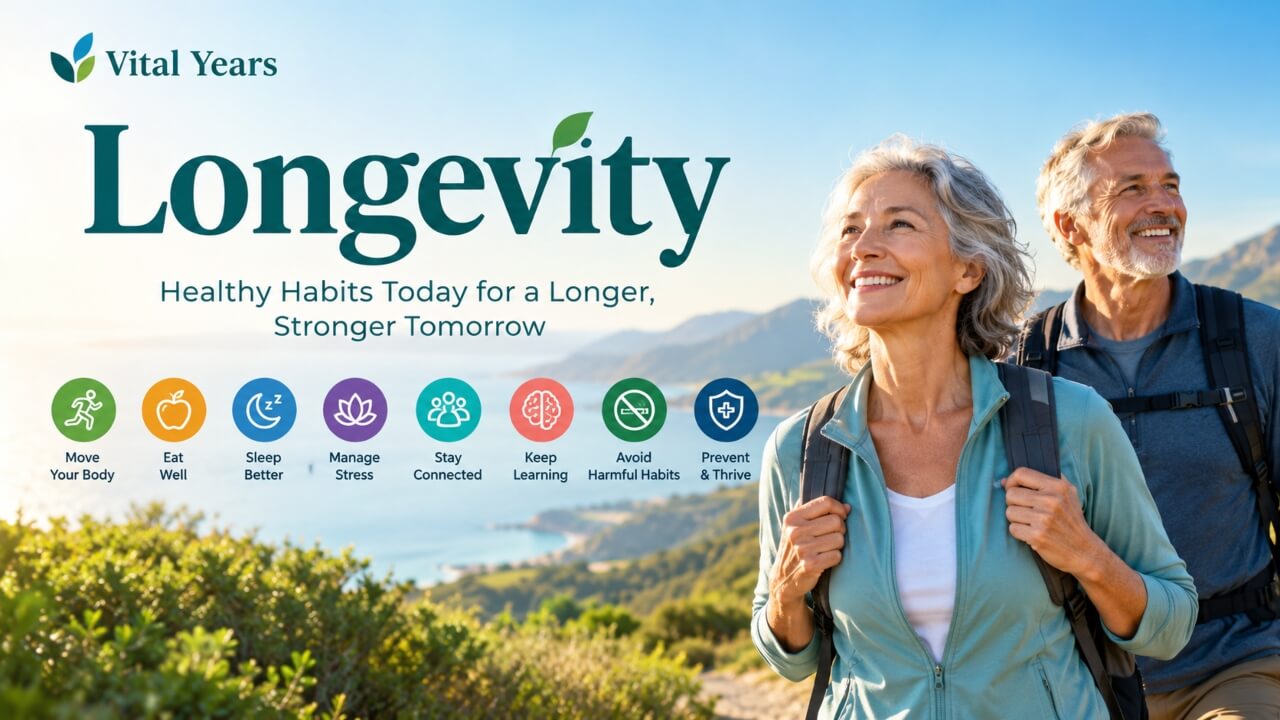
Move your body. Nourish yourself well. Sleep sufficiently. Manage stress. Stay connected. Keep learning. Avoid harmful habits. And create a lifestyle that you can realistically maintain.
Most importantly, remember that it is never too late to begin.
Longevity is not simply about living longer—it is about making more of your years healthy, capable, connected, and meaningful. At Vital Years, the goal is to help you make those years count.
Disclaimer: nennette.com does not provide medical advice. The information in our videos—including text, graphics, images, and other content—is meant for educational purposes only. Always consult your doctor or a qualified health professional before making any health or lifestyle changes.
Disclaimer: nennette.com does not provide medical advice. The information in our videos—including text, graphics, images, and other content—is meant for educational purposes only. Always consult your doctor or a qualified health professional before making any health or lifestyle changes.
Leave a Reply